
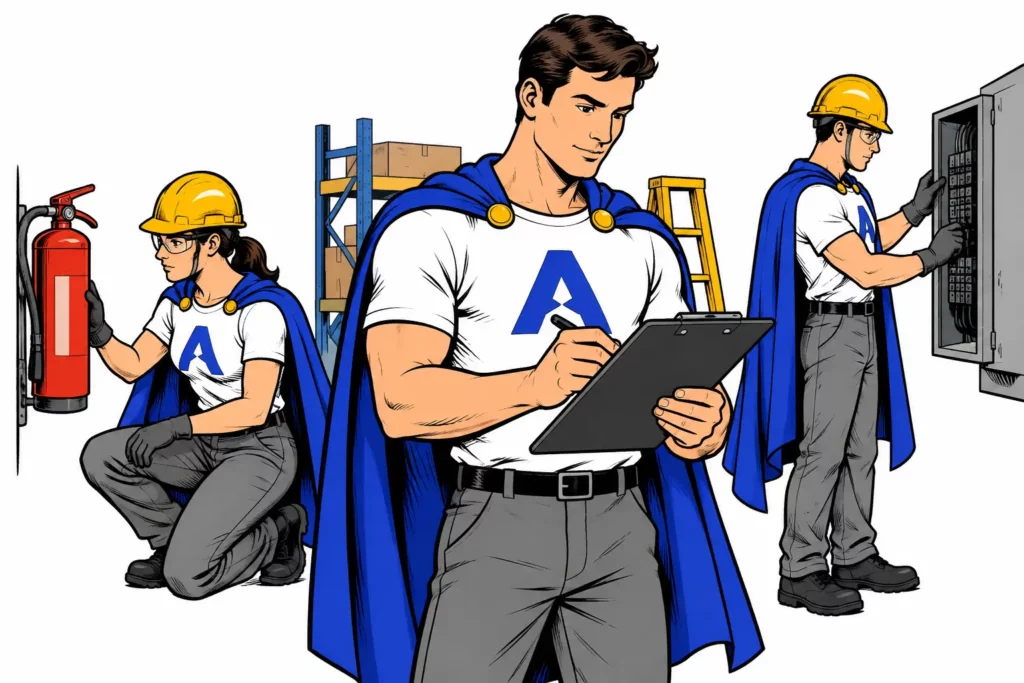
An inspection notice can feel like an unwelcome test of your German operation. Yet preparing for Berufsgenossenschaft inspections is usually less about producing a perfect folder and more about showing that safety is actively managed: risks are understood, responsibilities are clear, employees are protected and known gaps are being addressed.
The accident insurance institution (Berufsgenossenschaft, or BG) is not there to run your business for you. Its role is to prevent occupational accidents, work-related ill health and unsafe conditions. Inspectors will look at what happens in practice, not only what your policies say. For employers unfamiliar with the German system, calm preparation and clear evidence make a significant difference.
What a BG inspection is likely to examine
The scope depends on your sector, site, recent incidents and the reason for the visit. A warehouse, retail outlet, office, workshop and logistics operation carry different hazards. An inspection following a reportable accident will also be more focused than a routine visit.
At its core, the BG will consider whether you are meeting your duties under the Occupational Health and Safety Act (Arbeitsschutzgesetz, ArbSchG). It may review the workplace, speak with managers and employees, request records, and ask how you identify and control risks.
Inspectors commonly examine whether your risk assessment (Gefährdungsbeurteilung) reflects the real work being done. A generic document copied from another business rarely stands up well when the workplace, equipment or shift pattern tells a different story. They may also check employee instruction records, emergency arrangements, first aid provision, fire safety, work equipment, electrical safety and hazardous substances controls where relevant.
The question is not whether every risk can be eliminated. It is whether you have assessed it properly, chosen proportionate controls, communicated them to employees and followed up when conditions change.
Preparing for Berufsgenossenschaft inspections: start with reality
Begin with a site walk-through before you open your document archive. Bring together the person responsible for operations, facilities and HR, plus your occupational safety specialist (Fachkraft für Arbeitssicherheit, or SiFa) if appointed. Compare the workplace with the risk assessment line by line.
Look for ordinary details that often create findings: blocked escape routes, unsuitable storage, missing safety signs, unsecured shelving, damaged cables, incomplete machine guards, poor housekeeping or employees using equipment without documented instruction. In a warehouse, inspectors may pay close attention to pedestrian and forklift separation, racking condition, load signage and safe access. In an office, ergonomic workstation assessment, electrical equipment and emergency arrangements are more likely to feature.
Correct immediate safety issues straight away. Do not hide them or wait for the inspection. If a longer corrective action is necessary, record the risk, set an owner and deadline, and apply an interim control where appropriate. An honest, active action plan is more credible than pretending that a known issue does not exist.
Check whether your risk assessment is current
Your risk assessment should cover relevant work activities, locations, equipment and groups of workers. It must be reviewed when you introduce new machinery, chemicals, processes, premises, work patterns or significant staffing changes. It should also be reconsidered after an accident, near miss or concern raised by employees.
For international employers, a frequent gap is a headquarters policy that describes good intentions but does not assess the German site. Your local assessment needs to be practical and specific. It should identify hazards, define controls, assign actions and show that employees have received suitable instruction.
Pregnant workers, young workers, lone workers, temporary staff and employees with particular exposure risks may need additional consideration. What applies depends on the work, so avoid assuming that one assessment covers every situation.
Put the right people and records in place
German employers must arrange occupational safety support and occupational health provision appropriate to their business. Under DGUV V2, this commonly includes an occupational safety specialist and a company doctor (Betriebsarzt). The exact level of support depends on factors such as headcount, sector and risk profile.
Your inspection preparation should make responsibilities visible. Ensure managers know who the safety contact is, how to report hazards and what to do in an emergency. If you have appointed first aiders, fire wardens or other role holders, confirm that their training and availability match the site and shift arrangements.
Keep the following evidence organised and easy to retrieve. This is not a request to create paperwork for its own sake. Each record should demonstrate a real safety control.
- Current risk assessments and the related action plan
- Records of employee safety instruction, including induction and refresher sessions
- Appointment and support records for the occupational safety specialist and company doctor
- Accident, near-miss and corrective-action records
- Inspection records for relevant work equipment, electrical installations and warehouse racking
- Hazardous substances inventory, safety data sheets and operating instructions where chemicals are used
- Emergency, first aid and fire safety arrangements, including evacuation information
For electrical equipment, DGUV V3 inspections may be relevant. For shelving and pallet racking, the requirements associated with DGUV 208-043 are often a practical focus in storage environments. The applicable inspection regime depends on the equipment and site, so do not rely on a one-size-fits-all schedule.
Prepare employees, not just documents
Employees may be asked simple questions: What do you do if you spot a defect? Where is the first aid kit? Who is the first aider? How do you report an accident? What instruction did you receive before using this equipment?
Brief people in advance without scripting them. Explain the inspection, remind them of the reporting route and make sure they know where to find key safety information. A confident, honest answer is far better than a rehearsed one that does not match day-to-day practice.
This is also a useful test of your own arrangements. If employees cannot explain the essential controls for their work, the answer is usually more targeted instruction, clearer supervision or a better-designed process.
Use a three-step response plan
A sensible preparation process is straightforward.
1. Assess the site and the evidence
Review the notice, clarify the likely scope and inspect the workplace. Gather existing documents, then identify what is missing, outdated or not reflected in practice. If you have received a deficiency notice, translate every point into a specific action rather than responding with general assurances.
2. Correct and document priority gaps
Deal first with conditions that could cause harm. Then update assessments, arrange overdue inspections, provide instruction and assign accountable owners for remaining work. Record dates, decisions and evidence of completion. Where an action cannot be completed before the visit, be ready to explain the interim control and planned completion date.
3. Attend the inspection constructively
Have a responsible site representative available, together with relevant safety support where needed. Provide requested information clearly, take notes and ask for clarification if a requirement is unclear. After the visit, treat any finding as a managed corrective action with an owner, deadline and verification step.
When external support is particularly useful
External support is valuable when your business has no established German health and safety function, has received an inspection letter or deficiency notice, or is opening a new site under time pressure. It can also help when several duties overlap, such as occupational safety, occupational medicine, fire protection, equipment inspection and hazardous substances management.
Captain Safety can review the site, structure the evidence, help close practical gaps and provide ongoing support through the required occupational safety specialist and company doctor arrangements. The aim is not to turn your team into compliance experts overnight. It is to give you a clear route through the duties while keeping your people safe.
Common questions about BG inspections
Can a BG inspector issue requirements after a visit?
Yes. If an inspector identifies deficiencies, the BG may set expectations or deadlines for corrective action. Take the notice seriously, respond within the stated timeframe and retain evidence of what you have done. The appropriate response depends on the finding and the risk involved.
Do small offices need to prepare for an inspection?
Yes. A smaller office may face fewer high-risk hazards than a warehouse, but employer duties still apply. Risk assessment, suitable occupational safety support, employee instruction, first aid and emergency arrangements remain relevant.
What if a required document does not exist yet?
Do not fabricate it or backdate records. Establish the control properly, document the current position and create a realistic corrective plan. Early action, clear ownership and transparent communication put you in a stronger position than last-minute paperwork.
A BG inspection can be the prompt that turns scattered safety activity into a working system. Start with the real conditions at your site, give people the support they need and keep improving the controls that protect them every day.