
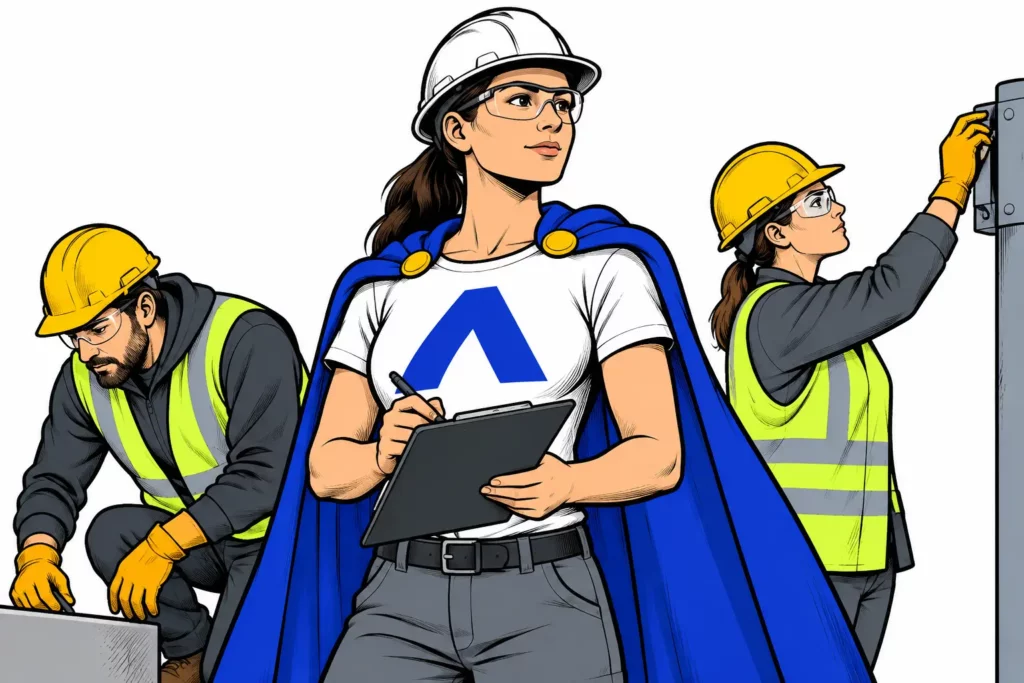
A new warehouse opens, an employee is injured, or a letter arrives from the accident insurance institution. At that point, many employers search for a guide to safety officer duties and discover that Germany uses several safety roles with different purposes. The key is not to appoint someone with a reassuring title. It is to build a practical system that identifies risks, assigns competent support and records what you have done.
The employer remains responsible for workplace health and safety. You can appoint internal people and engage external specialists, but responsibility cannot simply be handed away. For international businesses, this distinction is where the heroic journey begins: the right people can carry out vital work, while you retain oversight of the decisions, resources and corrective actions.
What does a safety officer do?
A safety officer (Sicherheitsbeauftragter) is an employee who supports safe working practices in the day-to-day operation. They are often a useful point of contact for colleagues, spotting unsafe conditions, encouraging the use of protective measures and passing concerns to management.
This role is not the same as an occupational safety specialist (Fachkraft für Arbeitssicherheit, or SiFa). A safety officer does not replace specialist advice, carry the employer’s legal responsibility or independently create a complete safety management system. Their role is generally supportive and preventative.
Whether you need to appoint a safety officer depends on the requirements of your accident insurance institution (Berufsgenossenschaft, or BG), the size and risk profile of your business, and the number of employees. A small office and a busy logistics site should not be treated alike. Where appointment is required, choose somebody who knows the work, communicates well with colleagues and has enough time to fulfil the role.
Guide to safety officer duties: know the roles first
German workplace safety duties are shared across several people, each with a defined contribution. Confusion arises when businesses use the label “safety officer” for all of them. That can leave serious gaps in risk assessment, occupational health or technical inspection.
The employer sets direction and resources
Under the Occupational Health and Safety Act (Arbeitsschutzgesetz, ArbSchG), you must assess hazards, put suitable controls in place, inform and train workers, and check whether those controls work. You must also provide the people, time and budget needed for safety work.
In practice, that means acting on findings rather than filing a document away. If a racking inspection identifies damaged uprights, for example, the employer must ensure the area is made safe and repairs are arranged. If an assessment identifies excessive stress in a fast-growing team, the response may involve workload, staffing and management action, not just a policy statement.
The occupational safety specialist advises on prevention
The occupational safety specialist (Fachkraft für Arbeitssicherheit, or SiFa) advises the employer on workplace safety, risk assessments, equipment, work processes, training and preventive measures. The role is established through the Occupational Safety Act (Arbeitssicherheitsgesetz, ASiG), with the scope of support shaped by DGUV V2 and your business risks.
A qualified external safety specialist can be particularly practical for companies that do not need a full in-house HSE department. They can inspect sites, identify gaps, help organise corrective actions and provide professional support when an authority or BG asks questions.
The company doctor covers occupational health
The company doctor (Betriebsarzt) advises on health risks at work, including preventive occupational medicine, fitness-related questions within the proper legal framework and measures to protect employee health. Occupational medical precautions may be required under ArbMedVV, particularly where workers face defined exposures or activities.
The safety specialist and company doctor should work together, but they have different expertise. A warehouse lifting issue, for instance, may need both a review of manual handling controls and medical advice on preventive occupational health arrangements.
Managers and employees make controls work
Managers must apply safety arrangements in the real workplace. Employees must follow instruction, use equipment properly and report defects or hazards. A safety officer can strengthen this link by making safety visible on the shop floor, in the office or across shifts. Yet they should not be left to chase every action alone.
The practical duties behind the title
A good safety officer contributes to a living safety process. Their exact duties should be set out in writing and matched to the site. For higher-risk operations, clearer reporting routes and more frequent checks are usually needed.
Typical duties include observing work areas, raising concerns about unsafe behaviour or defective equipment, helping communicate safety instructions and supporting local inspections. They may also encourage colleagues to report near misses, because an unreported near miss is a missed chance to prevent an accident.
They should know when to escalate. A blocked fire exit, damaged electrical lead, chemical spill or unstable racking bay needs prompt attention from the responsible manager and, where necessary, competent technical support. The safety officer should not be expected to make specialist decisions beyond their competence.
Start with a risk assessment, not a job title
The risk assessment (Gefährdungsbeurteilung) is the foundation of your safety arrangements. It should cover the actual work being done, not a generic checklist copied from another site. Consider premises, work equipment, substances, manual handling, electrical risks, fire safety, work-related stress, vulnerable workers and changing tasks.
For each identified hazard, decide who could be harmed, what controls already exist, what needs improving and who owns the action. Record the assessment and review it after significant changes, accidents, near misses or new information. A new warehouse layout, new machinery, increased headcount or a move to shift work can all trigger a review.
For hazardous substances, you need a separate, structured approach under GefStoffV and relevant TRGS. This can include an inventory, exposure assessment, safe storage, labelling, safety data information, training and emergency measures. Assigning this work to a safety officer without appropriate competence is not enough.
Training, inspections and documentation are connected
Safety instruction must be understandable, relevant to the task and repeated when circumstances require it. New starters need instruction before beginning work, while experienced employees need refreshers and updates when processes or risks change. Keep records showing what was covered, who attended and when it took place.
Technical checks have their own legal and practical requirements. Electrical equipment may require inspections under DGUV V3. Work equipment must be managed under BetrSichV, and storage systems such as racking need regular competent inspection, including requirements associated with DGUV 208-043. Fire protection duties also require clear evacuation arrangements, maintained equipment and trained people who understand their responsibilities.
Documentation is not paperwork for its own sake. It provides evidence of your decisions and gives managers a reliable way to follow actions through. Keep risk assessments, training records, inspection reports, accident records, appointments and corrective-action logs organised and available.
A three-step way to organise compliance
If your current arrangements are unclear, avoid trying to solve every duty at once. Start with an on-site review of your premises, work activities, existing documents and appointments. This reveals the highest-priority risks and any missing statutory support.
Next, turn findings into a corrective-action plan. Appoint the right competent people, complete or update risk assessments, address physical deficiencies, arrange inspections and deliver targeted employee training. Assign a named owner and realistic completion date to each action.
Then move into regular review. Safety duties change as your business changes, so annual planning, workplace inspections, safety committee meetings where required and ongoing specialist support help keep controls current. If a BG deficiency notice, inspection or reportable accident has triggered the review, act promptly and keep a clear record of the response.
Captain Safety can support this process nationwide, from an initial site inspection through corrective actions and continued occupational safety, occupational medicine, fire protection and compliance support. Request a quote when you need qualified help that fits the German system and the realities of your operation.
When a safety officer is not enough
A safety officer is valuable, but their appointment alone will not demonstrate that your employer duties are covered. You may also need an occupational safety specialist, company doctor, fire safety officer (Brandschutzbeauftragter), hazardous substances officer (Gefahrstoffbeauftragter) or trained first aiders, depending on your activities and risk assessment.
The sensible question is not, “Who can we call the safety officer?” Ask instead: “What hazards do we have, which legal duties apply, and who is competent to manage each one?” That question leads to safer workplaces, clearer accountability and fewer unpleasant surprises when an inspector calls.